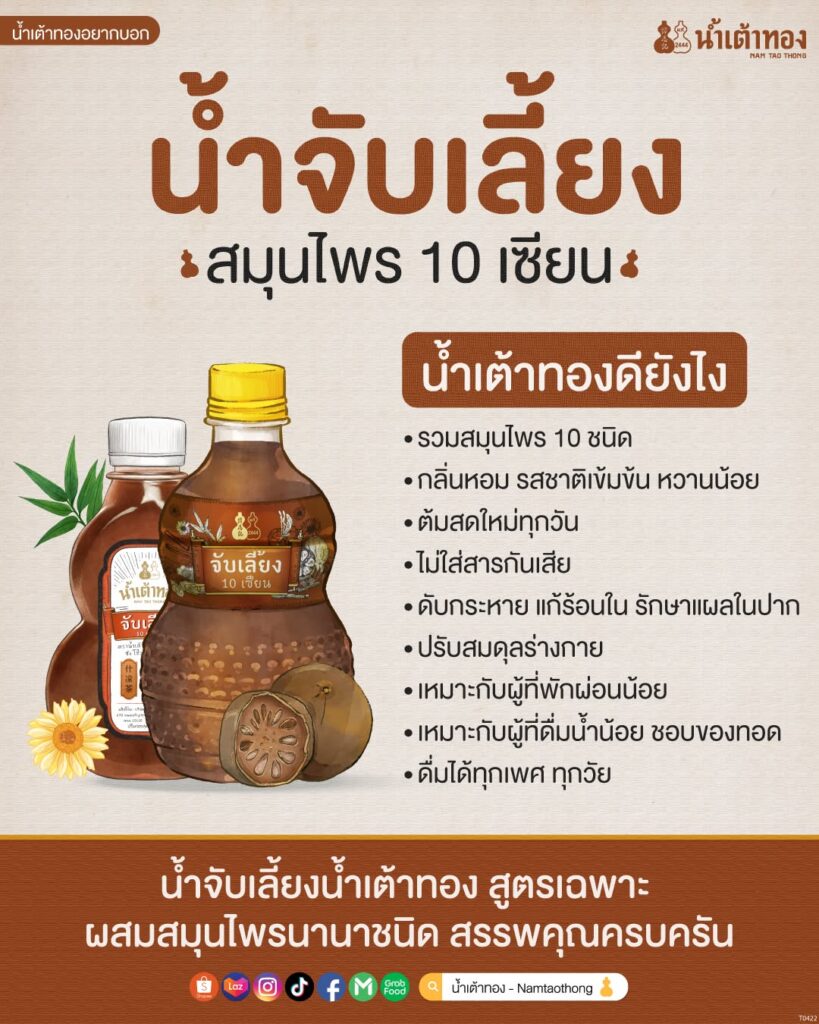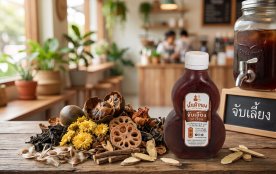
What is Jub Liang, and what does it help with?
Jub Liang (meaning “10 herbal cooling ingredients,” or translated literally: Jub means ten, and Liang means cooling) is a classical Chinese herbal formulation crafted by blending over 10 cooling herbs, such as Chinese grass jelly (Mesona chinensis), honeysuckle flower, monk fruit, and bamboo leaf. Its primary benefits include clearing internal heat, reducing fever toxins, treating canker sores and mouth ulcers, soothing sore throats, and promoting perspiration to release accumulated heat caused by Yin deficiency, excessive consumption of fried, greasy, or spicy heat-inducing foods, hot weather, or dehydration.
Consequently, Chinese and Thai-Chinese traditional wisdom views Jub Liang as a protective functional drink that prevents symptoms of internal heat (such as dizziness, sore throat, and dry mouth). When feeling slightly feverish or coming down with a cold, people often drink Jub Liang early on.
Core Ingredients and Pharmacological Mechanisms
The key difference between Jub Liang and single-herb drinks (such as Chrysanthemum or Centella Asiatica) lies in its nature as a synergistic herbal formula composed of carefully selected medicinal botanicals that amplify each other’s therapeutic efficacy:
1. Core Herbal Composition in Jub Liang
- Monk Fruit (Luo Han Guo): Contains mogrosides, which impart sweetness without spiking blood sugar levels. It helps lubricate the lungs, dissolve phlegm, and soothe sore throats.
- Honeysuckle Flower (Jin Yin Hua): A natural antimicrobial and anti-inflammatory agent that vents heat from the blood and relieves aphthous mouth ulcers.
- Chinese Grass Jelly (Mesona chinensis): A thirst-quenching herb that lowers internal core body temperature and nourishes the liver.
- Bamboo Leaf (Dan Zhu Ye): Directs heat downward to be expelled via urination, reducing irritability and restlessness induced by fever.
- Chrysanthemum & Safflower: Help dispel wind-heat and stimulate peripheral blood circulation.
2. Scientific Mechanisms of Action
- Inhibition of Inflammatory Cytokines: Polyphenols and flavonoids in the Jub Liang formulation inhibit the secretion of TNF-α and IL-6, accelerating the mucosal recovery of inflamed oral tissues (canker sores).
- Thermoregulation and Fluid Balance: Active compounds promote the clearance of metabolic waste and fluid regulation through perspiration and renal pathways, safely and naturally reducing internal body temperature.
Frequently Asked Questions (FAQ)
Q: How does Jub Liang differ from Chrysanthemum tea?
A: Chrysanthemum tea is a single-herb brew focused primarily on clearing liver heat and supporting eye health. In contrast, Jub Liang is a composite formulation combining over 10 cooling herbs, delivering a much broader and deeper therapeutic action for clearing heat toxins, breaking down fevers, and healing internal sores.
Q: When is the best time to drink Jub Liang?
A: Drink it at the first sign of accumulated internal heat—such as a parched throat or the onset of canker sores—or right after consuming deep-fried, grilled, or heavily spiced foods to immediately counteract heat and restore elemental balance.
References
- Chinese Pharmacopoeia Commission. (2020). Pharmacopoeia of the People’s Republic of China (Vol. 1). Beijing: China Medical Science Press. (Details the formulation of Heat-Clearing herbs, including Flos Lonicerae and Fructus Siraitiae)
- Li, C., et al. (2014). Anti-inflammatory and antioxidant activities of herbal tea extracts containing Siraitia grosvenorii and Mesona chinensis. Journal of Ethnopharmacology, 155(1), 452–461. [https://doi.org/10.1016/j.jep.2014.05.048](https://doi.org/10.1016/j.jep.2014.05.048) (Investigates anti-inflammatory and heat-reducing mechanisms of Jub Liang components)
- Wang, L., et al. (2018). Multi-target pharmacological mechanisms of traditional Chinese herbal formulas in treating oral ulcers. Phytomedicine, 48, 120–132. [https://doi.org/10.1016/j.phymed.2018.04.015](https://doi.org/10.1016/j.phymed.2018.04.015) (Validates multi-target mechanisms of traditional Chinese cooling formulas in treating oral mucosal ulcers)