What is “Internal Bruising” (Cham Nai)?
In Thai traditional medicine and everyday colloquial speech, “internal bruising” refers to internal physical injuries caused by blunt trauma or accidents without external skin lacerations, causing blood stagnation, deep soreness, and tenderness. In modern medicine, “internal bruising” usually corresponds to hematomas, internal tissue tearing, or deep muscle inflammation.
Meanwhile, heartbreak is often associated with both physical and psychological sensations—described along the lines of feeling “winded,” “disappointed,” “bitterly hurt,” and “heartbroken” (which certainly extends to the sting of betrayal). In medical terms, a “broken heart” is a real condition, though understood differently, known as “Broken Heart Syndrome”—an acute heart condition triggered by intense emotional stress.
1. “Internal Bruising” Through Traditional Thai and Modern Medical Perspectives
The term “internal bruising” holds distinct explanations across two dimensions:
- Traditional Thai Medical Perspective: Caused by severe blunt force trauma to the chest, abdomen, or deep muscle groups, which obstructs the circulation of blood and vital wind energy (Lom). This causes stagnation of blood and energy, resulting in sharp pain while breathing, difficulty taking deep breaths, and generalized deep body aches without visible exterior wounds.
- Modern Medical Perspective: Comparable to internal muscle strains/contusions, bleeding under the skin or within muscle layers (hematoma), as well as blunt trauma injuries to internal organs.
Properties of Thai Herbs in Relieving Internal Bruising
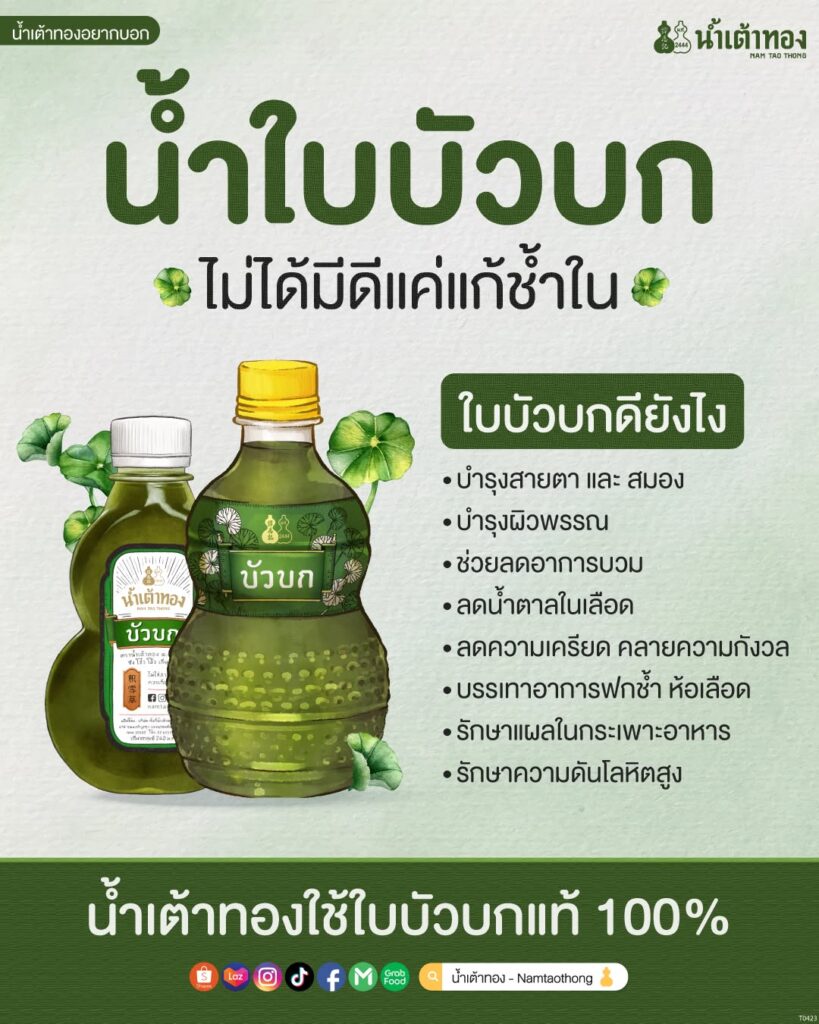
In traditional Thai medicine, herbs with balanced (Sukhum) or mild warming/cooling therapeutic tastes—such as “Centella Asiatica” (which contains triterpenoids that help reduce inflammation and stimulate microcirculation)—are commonly utilized to help dissipate stagnated blood and reduce deep internal soreness.
2. What is Broken Heart Syndrome in Modern Medicine?
Many people casually use the expression “internal bruising” or “heartbroken to the point of internal bruising” as a metaphor for deep grief. But did you know that broken heart syndrome is a medically recognized condition? It is clinically known as Takotsubo Cardiomyopathy or Stress-Induced Cardiomyopathy.
- What is it?: It is a temporary condition where the left ventricle of the heart balloons out and contracts abnormally, typically occurring after experiencing extreme emotional stress or acute heartbreak (such as the loss of a loved one, divorce, or severe sudden distress).
- Symptoms Resembling a Heart Attack: Patients experience acute chest pain, tightness, shortness of breath, and arrhythmias—symptoms often indistinguishable from a classic heart attack (myocardial infarction). However, coronary angiograms reveal no blocked coronary arteries.
- Treatment: In most cases, heart function recovers back to normal within a few weeks with timely, supportive care under cardiologist supervision.
Therefore, the popular Thai saying that “if you suffer from internal bruising, you must drink Centella Asiatica juice” reflects both genuine physical medicinal benefits and a metaphorical antidote for emotional sorrow. While Centella Asiatica might not physically mend a broken heart in the emotional sense, staying in peak health with Centella Asiatica certainly makes finding new love much easier, doesn’t it?