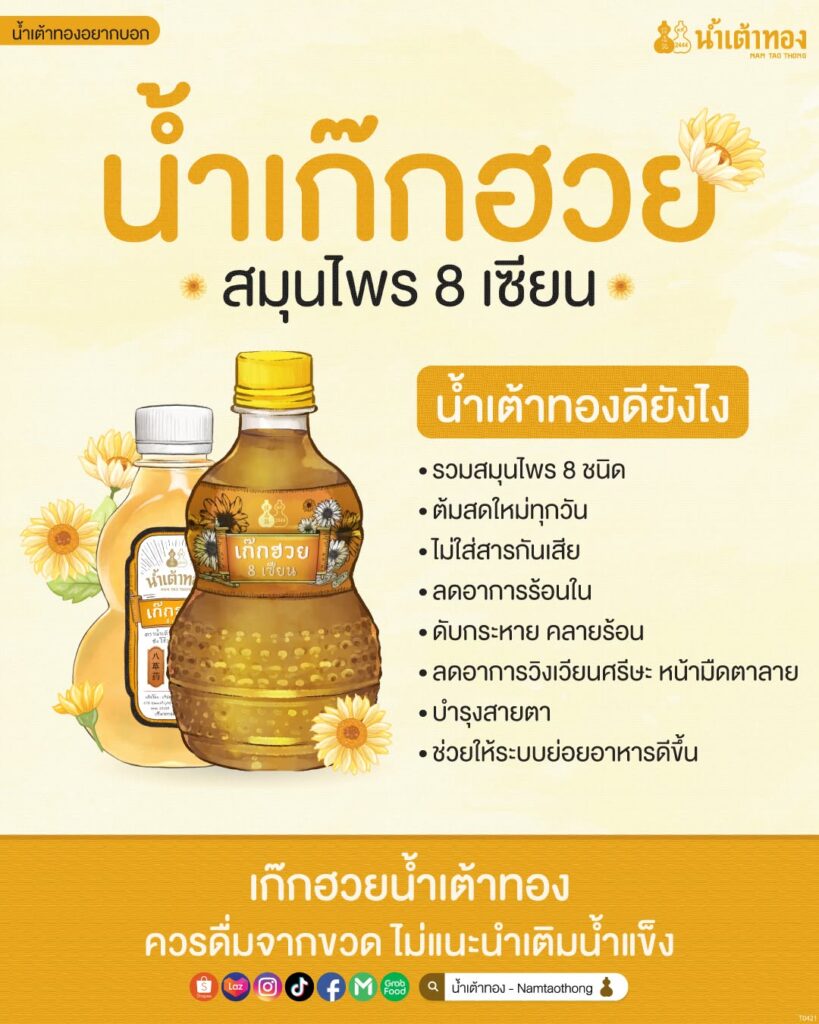
What is Chrysanthemum flower (Chrysanthemum indicum / Chrysanthemum morifolium), and what does it help with?
Chrysanthemum is an herb derived from dried chrysanthemum blossoms (a species of chrysanthemum) with cooling properties and a thousand-year history of use in Traditional Chinese Medicine (TCM). Its active flavonoids, such as luteolin and apigenin, help clear toxic heat, break down fever, quench thirst, relieve red eyes or eye fatigue from visual strain, and feature vasodilatory properties that help maintain healthy blood pressure levels.
Because dried chrysanthemum flowers have a pleasant aroma, it is an easy herb to drink. Many people find that it imparts a clean, fresh scent to the body as well. In addition, chrysanthemum is frequently combined with other herbs—such as in Jub Liang—to elevate flavor and add floral fragrance to multi-herb formulas.
Chrysanthemum has regained widespread attention because its active extracts nourish vision. In an era where modern lifestyles involve prolonged smartphone usage and long hours before computer screens, numerous research centers are turning their focus to the contemporary value of chrysanthemum flowers.
Medicinal Benefits and Scientific Mechanisms of Chrysanthemum (Medical Benefits)
Chrysanthemum is an herbal infusion backed by clear pharmacological actions across both Eastern pharmacopeias and modern scientific studies:
- Clear Liver Heat & Detoxification
- Mechanism: According to Traditional Chinese Medicine (TCM), chrysanthemum acts along the liver and lung meridians. Its primary therapeutic action is to disperse wind-heat and vent heat accumulated in the liver, thereby relieving canker sores, sore throat, heat-induced headaches, and irritability.
- Eye Health & Vision Support
- Mechanism: Antioxidants, including carotenoids and luteolin, protect retinal cells from UV rays and digital blue light exposure. This eases dry eyes, redness, ocular irritation, and digital eye strain caused by hours of staring at computer screens and mobile phones.
- Cardiovascular Protection & Blood Pressure Regulation
- Mechanism: Flavonoids present in chrysanthemum blossoms induce peripheral vasodilation, lowering vascular resistance. This improves systemic blood flow and assists in naturally moderating blood pressure.
Precautions and Risk Groups
- Individuals with a Cold Constitution or Prone to Diarrhea: Because chrysanthemum possesses significant cooling potency, individuals with weak digestion, frequent cold stomachaches, or chronic loose stools should avoid drinking concentrated infusions continuously.
- Beware of Hidden Sugars: Commercial pre-bottled chrysanthemum drinks frequently contain substantial amounts of added sugars. For optimal wellness benefits, opt for unsweetened home-brewed infusions or use stevia as a sweetener to avoid blood sugar spikes.
- Allergies to the Asteraceae / Daisy Family: Individuals with known sensitivities to pollen, sunflowers, or plants in the daisy family (Asteraceae) may experience skin rashes or respiratory irritation.
Frequently Asked Questions (FAQ)
Q: Is it harmful to drink chrysanthemum tea every day?
A: Drinking it daily is safe if brewed without excessive sugar and consumed in moderate amounts (1–2 cups per day). However, individuals with cold constitutions, low blood pressure, or weaker digestion should avoid prolonged consecutive consumption to maintain systemic balance.
Q: What is the difference between white chrysanthemum and yellow chrysanthemum?
A: White chrysanthemum (Bai Ju Hua) is predominantly used for nourishing eye health and tonifying the liver, offering a milder, sweeter flavor profile. Yellow chrysanthemum (Huang Ju Hua) boasts a more robust aroma and is noticeably superior for clearing toxic heat, abating fevers, and easing sore throats.
References
- Chinese Pharmacopoeia Commission. (2020). Pharmacopoeia of the People’s Republic of China (Vol. 1). Beijing: China Medical Science Press. (Details the clinical actions of Flos Chrysanthemi in dispelling heat, regulating the liver, and enhancing ocular clarity)
- Lin, L. Z., & Harnly, J. M. (2010). Identification of the phenolic components of chrysanthemum flower (Chrysanthemum morifolium Ramat). Food Chemistry, 120(1), 319–326. https://doi.org/10.1016/j.foodchem.2009.09.083 (Characterizes active flavonoid and phenolic constituents responsible for antioxidant and anti-inflammatory pathways)
- Hao, E., et al. (2019). The anti-inflammatory and cardiovascular protective effects of Chrysanthemum indicum: A review. Journal of Ethnopharmacology, 236, 42–56. https://doi.org/10.1016/j.jep.2019.02.040 (Demonstrates mechanisms of vasodilation and anti-inflammatory activity)